


As your knife slices through the crisp apple skin, your dog’s ears perk up and they hurry over. Snackies? You’d be happy to share, but can dogs eat apples or will it earn you an afternoon at the emergency vet?
It’s always smart to check with your vet before feeding your dog any new foods. And yes, dogs can absolutely have apples, but it’s helpful to know which parts of an apple are good for dogs (and which parts aren’t!), as well as how much apple is safe for dogs.
Can Dogs Eat Apples? The Short Answer
Yes, dogs can eat apples.
Just follow these three rules:
Remove the core.
Remove the seeds.
Keep portions small.
Do not feed your dog apples if they have:
Diabetes
History of pancreatitis
Known fruit sensitivities
All apple varieties that are commonly found in the grocery store are safe, from a crisp Granny Smith to a sweet Red Delicious.
Are Apples Good for Dogs?
They are! Apples are one of those rare treats that dogs usually love, and veterinarians generally approve of. They’re sweet, crunchy, low in calories, and full of nutrients that can support your dog’s health.
Treat | Serving Size | Calories | Fiber | Vitamin C | Potassium | Water |
Apple | 1/4 medium apple | 24 | 1.1 g | 2.1 mg | 49 mg | 85% |
Milk-Bone Original Medium Biscuit | 1 biscuit | 35 | <0.5 g | 0 mg | Minimal | ~5% |
Greenies Original Regular | 1 chew | 96 | ~6 g | 0 mg | Minimal | ~14% |
Cheddar Cheese | 1 oz | 114 | 0 g | 0 mg | 28 mg | 37% |
Vitamins A and C
Apples contain vitamins A and C, which help support everything from healthy skin and eyesight to normal immune function.
Fiber and Gut Health
One of the biggest benefits of apples is their fiber content.
Fiber helps keep the digestive system moving normally and can help your dog feel full longer after a snack. Apples also contain a type of soluble fiber called pectin, which helps support the beneficial bacteria that live in your dog’s gut. As a veterinarian, it’s always nice to recommend a treat that most dogs love and that actually has some benefits for them.
Of course, more isn’t always better. Too many apples can mean too much fiber (and natural sugar), which may leave your dog dealing with gas, loose stools, or an upset stomach instead of enjoying the health benefits.
Low-Calorie Hydration
Apples are made up of about 85% water, making them a refreshing snack, especially during warmer weather.
Can Apples Help Clean Your Dog’s Teeth?
Sort of, but not in the way some people think.
When your dog chews on a crisp apple slice, the crunchy texture can help scrape away a small amount of food debris from the surface of the teeth. The extra chewing also increases saliva production, which helps rinse the mouth naturally.
The key phrase here is a small amount.
Apples won’t remove tartar, prevent dental disease, or replace brushing your dog’s teeth. They’re a healthy snack, not a toothbrush. If your dog has dental problems, you’ll still need regular dental care to keep their mouth healthy.
The Parts of an Apple Dogs Should Never Eat
When we say apples are safe for dogs, we mean the flesh of the apple. The crunchy white part that you eat is generally safe. The seeds, core, and stem are where things get a little more complicated.
Apple Seeds
Apple seeds contain a naturally occurring compound called amygdalin. When a seed is crushed and digested, amygdalin can break down and release cyanide, but two apples can have very different cyanide-producing potential.
That’s one reason veterinarians can’t tell you that a specific number of seeds is always safe, but a few accidentally swallowed seeds are unlikely to cause a problem, especially if the seeds remain whole. The hard outer coating often passes through the digestive tract before much of the amygdalin is released.
Since they’re easy to remove, it’s best to take them out before offering your dog a slice.
The Core
While pet parents often worry about cyanide, veterinarians are more likely to see problems related to choking or intestinal blockages caused by the tough, fibrous core. The danger isn't that apple cores are toxic. It's that they're the wrong shape.
According to Cornell University's Riney Canine Health Center, intestinal obstructions occur when a swallowed object can't pass through the digestive tract normally. Depending on where the blockage occurs, it can become a serious medical emergency that may require surgery.
Apple Pie, Apple Juice, and Other Apple Products
Apples are safe for dogs. Apple-flavored foods are generally not. The problem usually isn’t the apple itself. It’s everything that gets added to it.
Apple pie, apple crisp, canned apple filling, and similar desserts are often loaded with sugar, butter, and other ingredients that can upset your dog’s stomach.
Apple juice isn’t a great choice either. One of the biggest benefits of fresh apples is their fiber content, but most of that fiber is removed during the juicing process. The addition of sugar and other extras doesn’t help either.
Plain, unsweetened applesauce is generally safe for dogs in small amounts, but many store-bought versions contain added sugars and other ingredients that dogs don’t need.
Sugar-free products are more concerning because they may contain xylitol, an artificial sweetener that is highly toxic to dogs. Xylitol poisoning in dogs requires an immediate call to your vet.
Can Dogs Eat Apple Skin?
Yes, dogs can eat apple skin. In fact, that's where much of the apple's fiber is found. A medium apple contains about 4.4 grams of fiber, with a significant portion concentrated in and just beneath the skin. Fiber helps support healthy digestion, feeds beneficial gut bacteria, and can help your dog feel fuller after a snack.
Should You Wash Apple Skin First?
Absolutely. Pesticide residues were detected on 98% of apple samples tested. The FDA recommends washing fresh produce under running water and avoiding soap or commercial produce washes, which can leave behind residues of their own. If you really want to go the extra mile, research published in the Journal of Agricultural and Food Chemistry found that soaking apples in a baking soda solution for 12 to 15 minutes removed up to 80% of one pesticide and 96% of another from the fruit's surface.
When Might You Want to Peel Apples for Dogs?
Most dogs can enjoy apple skin without any problems, but if your dog has a sensitive stomach, is recovering from dog diarrhea, or is trying apples for the first time, you may want to start with peeled slices, because the skin contains a lot of the apple's fiber.
How Many Apples Can a Dog Eat?
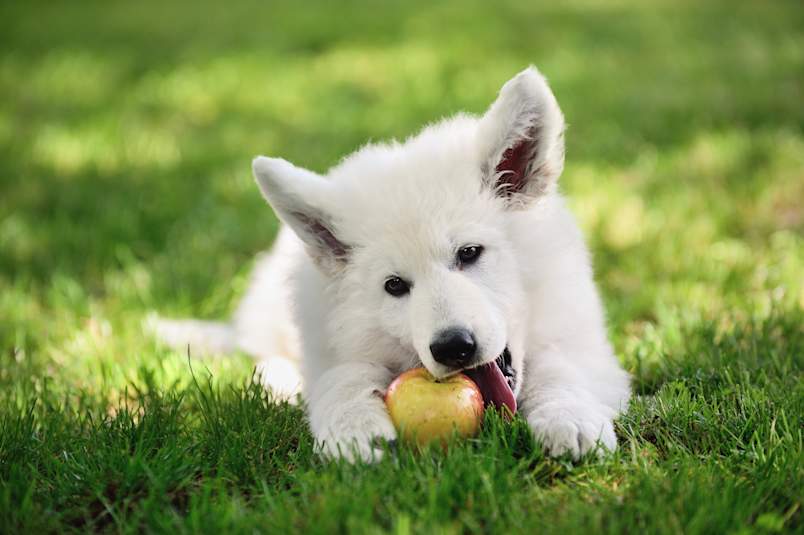
Don’t listen to your dog reading over your shoulder right now, whispering, “All of them.” You’re the one in charge of snack distribution here.
Apples are low in fat and packed with nutrients, but they’re still a source of calories, natural sugars, and fiber. A medium apple contains about 95 calories and 4.4 grams of fiber, according to the USDA. That’s not much for a person, but it can be a substantial snack for a small dog.
Veterinarians generally recommend following the 10% rule, meaning treats should make up no more than 10% of your dog’s daily calories. The remaining 90% should come from a complete and balanced diet.
Apple Serving Size Chart for Dogs
Dog Size | Weight | Suggested Apple Amount |
Toy/Small | Under 20 lbs | 1-2 slices |
Medium | 20-50 lbs | 2-4 slices |
Large | 50-90 lbs | 4-6 slices |
Giant | 90+ lbs | Up to 1/2 apple |
How to Safely Prepare and Serve Apples to Your Dog
Preparing apples for your dog isn’t complicated. Wash the apple, remove the core and seeds, and cut it into pieces that make sense for your dog’s size. Remember that dogs don’t always properly chew their food, so make pieces small enough that if swallowed whole they aren’t going to be a choking hazard. After that, you can get a little creative.
Apple and Cheese: A Snack for Two
Here’s a fun excuse to put together a mini cheese board.
Set out a few apple slices for yourself, a few for your dog, and add a couple cubes of mild cheese to share. While you’re at it, pour yourself a glass of Riesling or Chardonnay. Both pair beautifully with apples and cheese. Then raise your glass, give them some fresh water, and enjoy a sophisticated snack with your furry gourmand.
Frozen Apple Yogurt Bark
Spread plain Greek yogurt onto a parchment-lined plate or small baking sheet. Sprinkle with finely diced apples and a few blueberries, then freeze until firm. Break into pieces before serving.
Apple and Pumpkin Kong Parfait
Layer small apple pieces and plain pumpkin puree inside a Kong, then freeze for a few hours before serving. The combination is naturally sweet, packed with fiber, and takes much longer to eat than a handful of apple slices.
Think of it as the canine version of a parfait, but rather than a fancy glass, theirs comes in a rubber toy.
Signs Your Dog Ate Too Much Apple and When to Call the Vet
Most dogs can enjoy a few apple slices without any problems. The trouble usually starts when a dog helps themselves to far more apple than anyone intended. Too many apples can mean too much fiber, too much sugar, or, in some cases, a piece of core that’s causing trouble.
Mild Signs to Monitor at Home
Gas
Mild stomach discomfort
Soft stool
Diarrhea
Temporary loss of appetite
These symptoms often resolve on their own within a day or two. You may also notice a little extra enthusiasm for trips outside. That’s the fiber doing exactly what fiber is designed to do.
When to Call Your Veterinarian
Vomits more than once
Has diarrhea for more than 24 hours
Refuses food
Seems unusually tired or uncomfortable
Ate a large amount of apple, including the core or seeds
Has diabetes, pancreatitis, or another chronic digestive condition
When to Seek Emergency Care
Choking
Repeatedly gagging
Struggling to breathe
Vomiting repeatedly
Showing signs of severe abdominal pain
Unable to keep water down
Developing a swollen abdomen
Unable to pass stool after swallowing part of an apple core
How Embrace Pet Insurance Can Help
Most apple-related mishaps end with an upset stomach, and a lesson learned. Occasionally, though, a dog eats something they shouldn’t, develops severe digestive symptoms, or needs emergency treatment for a blockage. Those situations are stressful enough without worrying about the cost of care.
If your dog needs emergency exams, diagnostic testing, hospitalization, or even surgery related to an unexpected accident or illness, dog insurance can help you focus on getting answers and treatment instead of the bill.
Are Apples Good for Dogs?
The next time your dog hears an apple being sliced and comes running to investigate, you can feel pretty good about sharing. Whether you’re treating them with a simple apple slice, building a snack board for your four-legged foodie, or freezing a batch of apple yogurt treats, apples are one of the easier human foods to share safely.