

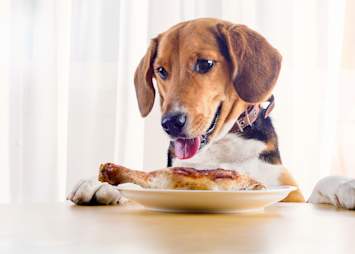
Have you heard of the chicken tax? It’s the unwritten rule that says every time chicken is served, your dog is entitled to a bite. It’s a tax most pet parents are happy to pay. But when should you refuse to pay?
Is all chicken safe for dogs?
Plain, fully cooked chicken is a healthy treat for many dogs, but chicken bones, seasonings, fried coatings, and certain preparations can turn snack time into a veterinary emergency.
Can Dogs Eat Chicken? The Short Answer
Yes, dogs can eat chicken when prepared safely.
Dogs can eat chicken that is:
Plain and fully cooked
Boneless
Skinless
Unseasoned
Served as a treat or meal topper
Dogs cannot eat:
Cooked chicken bones
Fried chicken
Chicken seasoned with garlic, onion, salt, or other spices
Chicken covered in sauces, marinades, or breading
Undercooked chicken
Remember, dogs should only be getting about 10% of their calories from treats, including high protein snacks like chicken.
Is Chicken Good for Dogs? Nutrition, Safe Amounts, and Allergies
Chicken can absolutely be good for dogs. In fact, it’s a prime ingredient in many dog foods because of the nutrients it contains.
Nutrient | Health Benefits for Dogs |
High-quality protein | Helps build and repair muscles, skin, organs, and other tissues. |
Essential amino acids | Provide the building blocks for muscle function and tissue repair. |
B vitamins | Support energy production, brain function, metabolism, and a healthy nervous system. |
Phosphorus | Helps build strong bones and teeth and supports normal cell and kidney function. |
Selenium | Supports immune health and acts as an antioxidant to help protect cells from damage. |
Supports healthy skin and coat, wound healing, and immune function. | |
Iron | Helps produce red blood cells that carry oxygen throughout the body. |
Healthy fats | Provide energy and help the body absorb fat-soluble vitamins while supporting healthy skin and a shiny coat. |
When Veterinarians Recommend Chicken
Because it’s lean and easy to digest, veterinarians often recommend plain boiled chicken and white rice for dogs as a short-term bland diet while recovering from vomiting or diarrhea.
It can also encourage dogs recovering from illness or surgery to eat.
When Chicken Isn’t Good for Dogs
Although true food allergies are uncommon, chicken is one of the proteins most often linked to them. If your dog develops itchy skin, recurring ear infections, excessive paw licking, or chronic digestive upset after eating chicken, your veterinarian may recommend an elimination diet.
Chicken should be used in small amounts and with caution for dogs with certain medical conditions that require a specialized diet, such as advanced kidney disease or pancreatitis in dogs, where the amount of protein or fat needs to be carefully controlled.
Can Dogs Eat Chicken? Every Form, Explained
Whether you’re carving a rotisserie chicken or your dog just snagged a chicken nugget, it’s worth knowing which types are safe and which should stay off the menu.
Type of Chicken | Safe to Feed? | What to Know |
Boiled chicken | ✅ Yes | The gold standard. Plain, skinless, boneless boiled chicken is easy to digest and is often recommended by veterinarians as part of a short-term bland diet. |
Grilled, baked, or roasted chicken | ✅ Yes | Safe if it’s plain and fully cooked. Skip the marinades, rubs, butter, barbecue sauce, and bones. |
Rotisserie chicken | ❌ No | Most rotisserie chickens are high in sodium and may contain garlic, onion, or other ingredients that are toxic to dogs. |
Fried chicken | ❌ No | High in fat, salt, and calories. The greasy coating can cause stomach upset and may increase the risk of pancreatitis. |
Canned chicken | ⚠️ Sometimes | Plain chicken packed in water is okay, just choose low-sodium varieties with minimal ingredients and drain or rinse before serving. |
Chicken nuggets | ❌ No | Highly processed and typically loaded with breading, salt, preservatives, and frying oils. |
Chicken skin | ❌ No | While not toxic, it’s high in fat and calories. Eating too much fatty skin can trigger digestive upset or pancreatitis. |
Chicken broth | ⚠️ Sometimes | Many store-bought broths contain onion, garlic, or excess sodium. Look for one made with only chicken and water and no added seasonings. |
Can Dogs Eat Raw Chicken?
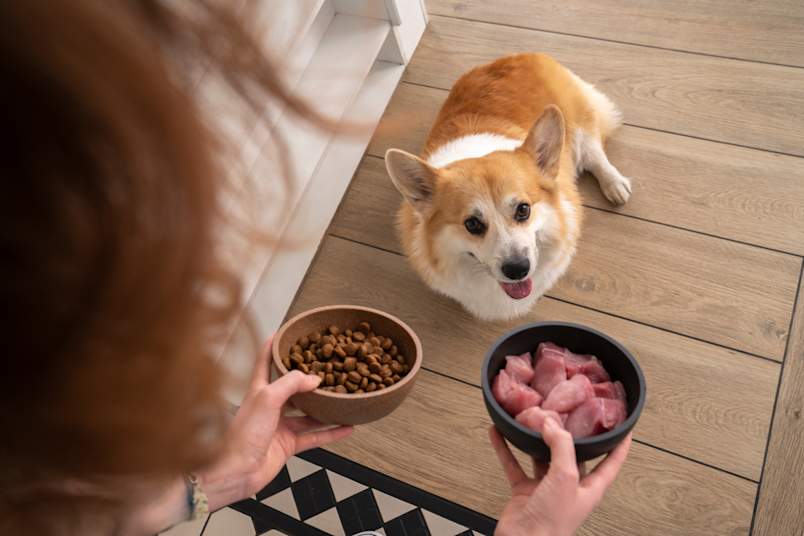
Can they? Sure. But should they? Probably not.
Dogs are capable of digesting raw chicken, so if your dog grabs a piece that falls on the floor while you’re cooking, don’t panic. However, most veterinarians do not recommend feeding raw chicken as part of your dog’s regular diet because of the potential risks of bacterial contamination.
Some commercial raw diets use high-pressure processing (HPP) to reduce bacterial contamination, but they aren’t completely risk-free.
Why veterinarians recommend against raw chicken
The biggest concern is bacteria. Raw chicken can carry Salmonella and Campylobacter, two of the most common causes of foodborne illness.
While some dogs become sick after eating contaminated chicken, others show no symptoms but can still shed the bacteria in their saliva and stool for days or even weeks. That means they can spread germs to people and other pets through kisses, shared water bowls, toys, or contaminated surfaces.
Raw chicken has also been linked to acute polyradiculoneuritis (APN), a rare neurological condition that causes muscle weakness that can progress to paralysis.
My dog ate raw chicken. Now what?
Most healthy adult dogs that eat a small amount of boneless raw chicken won’t have serious problems, but there are situations in which you should be concerned.
Situation | What to Do |
Healthy adult dog ate a small piece of boneless raw chicken | Monitor for vomiting, diarrhea, loss of appetite, or lethargy for the next 48 to 72 hours. |
Puppy, senior dog, or immunocompromised dog ate raw chicken | Call your veterinarian for advice, as these dogs may be more vulnerable to infection. |
Dog develops vomiting, diarrhea, fever, weakness, or neurological signs | Seek veterinary care promptly. |
Someone in your household is pregnant, immunocompromised, very young, or an older adult | Wash your hands after handling your dog, disinfect food bowls and surfaces, and promptly clean up your dog’s stool to reduce the risk of spreading bacteria. |
The Bone Question: Cooked vs. Raw Chicken Bones
Not all chicken bones carry the same risks.
Cooked bones become brittle and can splinter into sharp pieces that may cause choking, mouth injuries, intestinal blockages, or tears in the digestive tract.
Raw bones are less likely to splinter, but they can still cause choking, broken teeth, intestinal blockages, and bacterial exposure.
My dog ate a chicken bone. What should I do?
If your dog ate a cooked chicken bone, contact your veterinarian for advice, especially if they’re a puppy or small breed. Do not try to make your dog vomit, as the bone can cause more damage coming back up.
If your dog ate a raw chicken bone, monitor them closely. Many dogs pass raw bones without problems, but you should still watch for vomiting, loss of appetite, abdominal pain, constipation, straining to defecate, bloody stool, lethargy, or choking.
When to Call Your Vet
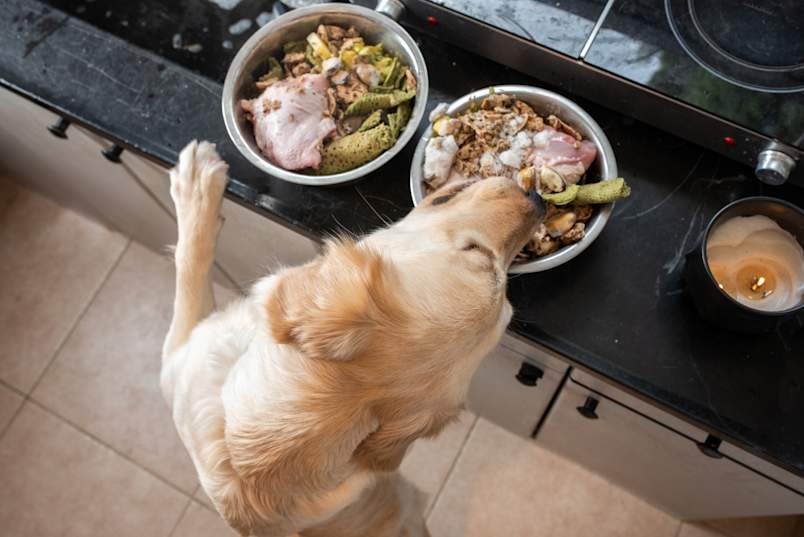
Not every chicken mishap is an emergency, but some situations need prompt veterinary care.
Call your veterinarian if:
Your dog ate cooked chicken bones.
Your dog ate a large amount of seasoned, fried, or fatty chicken.
Your dog develops vomiting, diarrhea, loss of appetite, or lethargy after eating chicken.
Go to an emergency veterinarian immediately if:
Your dog is choking or having trouble breathing.
Your dog repeatedly vomits or can’t keep food or water down.
Your dog has severe abdominal pain or a swollen abdomen.
Your dog has bloody vomit or stool.
Your dog becomes weak, collapses, or has trouble walking.
How Embrace Can Help
Chicken-related emergencies can require X-rays, hospitalization, endoscopy, or surgery. Dog insurance can help cover eligible veterinary costs for covered accidents and illnesses, so you can focus on getting your pup the care they need rather than worrying about the bill.
Wondering what human food can dogs eat besides chicken? Or can dogs eat hot dogs? Maybe you’re cleaning out the fridge and wondering what can dogs not eat before you use them as a living garbage disposal. Always check with your vet if you have questions about your dog’s diet!
Annual check-ups are a great time to chat with your vet about what foods your dog can safely have. Consider adding an optional wellness plan to help you budget for all those routine visits so that they don’t get pushed aside.
Can Dogs Have Chicken?
The chicken tax isn’t going anywhere, and neither is the hopeful face staring up at you from the kitchen floor. Knowing when it’s safe to share means you can enjoy those little moments together without second-guessing yourself. Your dog gets a tasty treat, you get a happy tail wag, and everyone wins.