

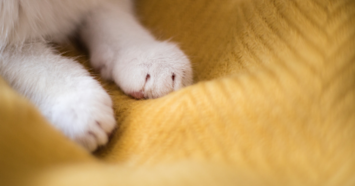
Your cat may not know a single recipe, yet they still manage to make biscuits on blankets, couches, and sometimes your legs. That gentle paw motion known as kneading is an instinctive behavior linked to nursing, comfort, and bonding. Whether you call it "making biscuits," "playing the piano," or just "happy paws," this pushing motion is a sign that your cat feels safe, content, and comfortable.
Cat kneading is a natural behavior where cats rhythmically push their paws against soft surfaces. Most cats knead to express comfort, mark territory with scent glands, stretch muscles, or recreate nursing instincts from kittenhood. When your cat kneads on you, a blanket, or their favorite spot on the couch, they're expressing deep contentment and trust.
What Is Cat Kneading?
Cat kneading is when your cat rhythmically pushes their paws in and out against a soft surface, alternating between left and right. The motion looks remarkably similar to kneading bread dough, which is why it's often called "making biscuits."
Cats typically knead on soft surfaces like blankets, pillows, cushions, or your lap. Some cats keep their claws retracted during the process, while others extend them fully. Many cats purr loudly while kneading, and some even drool a little. If your cat drools while making biscuits, that's actually a sign of a truly blissed-out feline.
6 Reasons Cats Make Biscuits
Cats knead for several interconnected reasons, most rooted in their earliest days of life.
1. It's a Nursing Instinct from Kittenhood
When kittens nurse, they knead their mother's belly to stimulate milk flow. This rhythmic pushing motion helps express milk and becomes deeply associated with comfort, warmth, and security. Even though adult cats no longer need to nurse, the behavior remains hardwired as a way to self-soothe and express contentment. The motion triggers the release of feel-good hormones, mainly dopamine and oxytocin, which explains why kneading cats often look so peaceful. This is just one of many kitten behaviors that persist into adulthood.
2. Your Cat Feels Safe and Content
A kneading cat is a happy cat. Cats mainly make biscuits when they feel secure in their environment and relaxed enough to let their guard down. You'll often notice kneading paired with other contentment signals: purring, slow blinking, a relaxed posture, and half-closed eyes. If your cat kneads while sitting on your lap, take it as a compliment. They feel completely safe with you.
3. They're Marking Their Territory
Cats have scent glands located in the soft pads of their paws. According to the Cornell Feline Health Center, cats deposit their scent from glands in their cheeks and paws when they rub against surfaces. When your cat kneads on you or their favorite blanket, they're depositing their unique scent and essentially claiming that person or object as "theirs." This is a possessive behavior, but it's also deeply affectionate. Your cat is marking you as part of their family and signaling to other animals that you belong to them.
4. They're Preparing a Cozy Spot
Wild cats would tread down grass, leaves, or foliage to create a comfortable nest for resting or giving birth. Domestic cats retain this instinct, which is why you might notice your cat kneading a blanket or bed before settling down to sleep. Pregnant cats often knead more frequently as their due date approaches, driven by the instinct to prepare a safe nesting spot for their kittens.
5. They're Stretching Their Muscles
Kneading provides a mini-workout for your cat's paws, legs, and shoulders. Considering cats sleep anywhere from 12 to 16 hours a day, this gentle stretching helps keep their muscles limber and joints flexible. You might notice your cat kneading right after waking up from a nap, similar to how humans stretch after sitting for a long time.
6. They're Self-Soothing
For some cats, kneading serves as a coping mechanism for stress or anxiety. The repetitive motion is calming, much like how a child might find comfort in a security blanket. Cats who were weaned too early (before 8 weeks of age) sometimes knead more frequently. According to the Merck Veterinary Manual, early weaning can affect behavior development. If your cat's kneading seems excessive or compulsive, or if it's accompanied by signs of stress, it's worth mentioning to your vet.
We often think of purring and kneading as a happy cat’s game, but both gestures can sometimes indicate stress. It may seem weird, but stress presents itself differently in different cats. So, if you notice an uptick in your cat’s kneading or purring, especially after a big change in their lives, it may be due to stress and not contentedness at all. Stress needs to be addressed or it can lead to changes in appetite, litter box problems, and other health issues.
Why Do Cats Make Biscuits?

Reason | What It Means | Signs to Look For |
Nursing instinct | Comfort-seeking behavior from kittenhood | Rhythmic motion, may suckle blanket |
Contentment | Your cat feels safe and happy | Purring, slow blinking, relaxed posture |
Scent marking | Claiming you or the surface as "theirs" | Focused kneading on specific spots |
Nesting | Preparing a comfortable resting spot | Kneading before lying down |
Stretching | Keeping muscles limber | Kneading after waking up |
Self-soothing | Coping with stress or anxiety | Excessive or compulsive kneading |
Why Does My Cat Knead Me Specifically?
When your cat kneads on you, it's one of the highest compliments they can give. You've essentially become a source of comfort and security, similar to the role their mother played when they were a kitten. Your cat is telling you that you make them feel safe, loved, and content.
The warmth of your lap mimics the cozy feeling of nursing, which triggers that instinctive kneading response. Your cat is also marking you with their scent, claiming you as family. Some cats are particular about who they knead on. If you share your home with multiple people but your cat only makes biscuits on you, it likely means they prefer your specific scent or feel an especially strong bond with you.
Different Cat Kneading Styles
Not all cats knead the same way. Here are the variations you might notice:
Front paws only: This is the most common kneading style. Your cat alternates pushing with their front paws while their back end stays still.
All four paws: Some enthusiastic cats get their whole body involved, paddling with all four feet like they're marching in place.
Claws extended: If your cat fully extends their claws while kneading, it can be painful when they're on your lap. This isn't aggressive behavior. It actually means they're really into it. The more relaxed a cat is, the more likely they are to let those claws out.
Claws retracted: Some cats knead gently with their claws tucked away. Same behavior, same meaning, just easier on your skin.
With suckling: Some cats nurse on blankets while kneading, licking or gently biting the fabric. This is especially common in cats who were weaned early and is completely normal instinctive behavior. Cats weaned too young may also show other self-soothing behaviors, which can sometimes be linked to separation anxiety in cats.
The "slow bake": Slow, deliberate kneading with long pauses between pushes. This usually happens when a cat is extremely relaxed and possibly drifting off to sleep.
The "speed knead": Fast, enthusiastic kneading that often happens when a cat is excited or particularly happy to see you.
What If My Cat Doesn't Knead?
If your cat doesn't knead, don't worry. It doesn't mean they don't love you or that something is wrong. Not all cats express their contentment this way, and that's perfectly normal. Cats who were weaned at the ideal time (around 8 weeks or later) sometimes knead less frequently than those weaned earlier. Personality also plays a role. Some cats are simply less demonstrative than others, just like some people are more reserved with physical affection. If your cat doesn't make biscuits, look for other signs of affection and contentment. Cats show love in many ways:
Following you from room to room
Rubbing their head against you (called bunting)
Looking at you with a slow blink
Approaching with a soft, curved tail
Simply choosing to be in the same room as you
These are all signs your cat loves you, even if they're not the "kneady" type. If you'd like to encourage your cat to start making biscuits, try offering different soft fabrics to snuggle on. Fleecy or sherpa-style materials seem to be favorites and might stir up that primal kneading instinct.
How to Handle Painful Kneading
While kneading is an expression of love, those claws can hurt. Here's how to manage the situation without discouraging this sweet behavior:
Never punish your cat for kneading. It's an instinctive behavior rooted in affection. Pushing your cat away or scolding them can damage your bond and confuse them.
Keep claws trimmed. Regular nail trims reduce the sharpness without affecting your cat's ability to knead comfortably. If you're not comfortable trimming nails yourself, your vet or a groomer can help.
Use a blanket barrier. Keep a thick blanket or folded towel nearby and place it on your lap before your cat settles in. This gives them a satisfying surface to knead while protecting your legs.
Gently redirect. If the kneading becomes too intense, gently move your cat's paws to a nearby pillow or blanket without making them feel rejected.
Dress for cuddles. If you know your cat is a kneader, consider wearing thicker pants during prime snuggle times.
When Kneading Is Normal and When to Be Concerned

Small behavior shifts, including changes in kneading, are often the first clue that something may be off with your cat. Checking in with your veterinarian early can help rule out stress, pain, or underlying health issues. If you ever have concerns about changes in your cat's behavior or health, having cat insurance lets you schedule those visits without hesitating over the cost.
Questions You Can Ask Your Vet About Kneading
Is my cat’s kneading normal, or could it be linked to stress or anxiety?
Why does my cat knead me specifically instead of other people?
Can excessive kneading be a sign of pain or a medical issue?
Could early weaning affect how often my cat kneads?
When should a change in kneading behavior prompt a vet visit?
Regular checkups can help you track subtle behavior changes over time. Many pet parents use a cat wellness plan to budget for routine exams, nail trims, and preventive care, which makes it easier to bring up small concerns like changes in kneading before they become bigger issues. Consistent preventive care gives your vet a clearer picture of what’s normal for your cat and what might need attention.
Why Do Cats Make Biscuits?
Kneading may look simple, but it reflects a mix of instinct, comfort, and communication that starts early in a cat’s life. For most cats, making biscuits is just another way they relax, mark familiar spaces, and connect with the people and environments they trust. Paying attention to how and when your cat kneads can give you small clues about their mood and wellbeing over time.
Whether your cat is an enthusiastic baker or never kneads at all, every cat has their own way of showing comfort and connection. The goal isn’t to change the behavior, just to understand what it means