

PU surgery (perineal urethrostomy) for cats is a procedure that can save your cat’s life when urinary blockages keep coming back. Before your cat goes in for perineal urethrostomy, you’ll want to know what the surgery involves, how much it costs, what recovery looks like, and what to expect long-term.
What Is PU Surgery (Perineal Urethrostomy)?
Perineal urethrostomy (PU) is a surgical procedure that removes the narrow end of a male cat’s urethra and creates a wider permanent opening for urination. The urethra is the tube that carries urine from the bladder to the outside of the body, and in male cats, it narrows significantly as it passes through the penis. That narrow section is where blockages from crystals, mucus plugs, and small stones tend to get stuck.
By removing the narrowest part and stitching the wider pelvic portion of the urethra directly to the skin, PU surgery gives urine a shorter, wider path out of the body. The result looks similar to female cat anatomy, and most cats adjust within a few weeks.
When and Why Cats Need PU Surgery
Male cats are especially prone to urinary obstructions because their urethra narrows to roughly 0.7mm at the tip of the penis, compared to about 2mm in the pelvic region. Blockages form when crystals, protein-rich mucus plugs, small stones, or blood clots lodge in that narrow passage.
A blocked cat cannot urinate, and the condition becomes an emergency fast. Toxins build up in the bloodstream, and without treatment, a complete urinary blockage can become fatal within 24 to 72 hours. Signs include frequent squatting with little or no urine, crying in the litter box, licking the genital area, vomiting, and sudden lethargy.
The first line of treatment is typically catheterization, where a vet passes a catheter through the urethra to flush the blockage into the bladder. Many cats recover well with this approach, combined with IV fluids and diet changes. However, your vet may recommend PU surgery if:
The blockage cannot be cleared with a catheter
Your cat has experienced multiple urinary blockages despite medical management
The urethra has been severely damaged or scarred from repeated catheterizations
PU surgery is definitely not as common as urethral blockages in cats and is generally considered a last resort after other options have been tried, not a first-line treatment.
How PU Surgery Is Performed
If your cat is currently blocked, the veterinary team will stabilize them first with IV fluids and correction of electrolyte imbalances before surgery, which may take 12 to 48 hours.
During the procedure, your cat is placed under general anesthesia. The surgeon removes the penis and the narrow portion of the urethra, then stitches the wider pelvic urethra directly to the skin to create the new opening. The procedure typically takes 45 minutes to 1.5 hours, and most cats stay in the hospital for 1 to 3 days afterward.
According to the American College of Veterinary Surgeons, if the surgery is performed properly, it is unlikely that cats will develop subsequent urinary obstructions from the same cause.
PU Surgery Recovery: A Week-by-Week Timeline
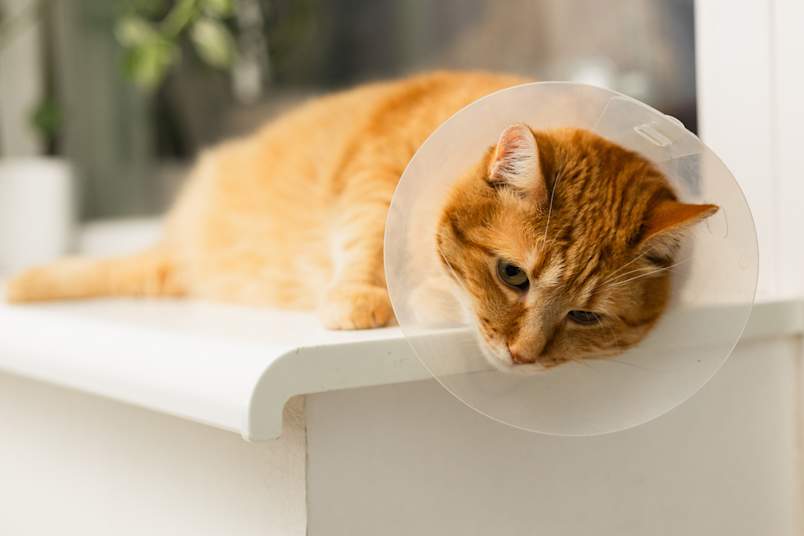
Recovery from PU surgery takes about 2 to 3 weeks. Here is what to expect:
Timeframe | What to Expect | What You Should Do |
Days 1-3 | Bloody urine (normal), grogginess, possible accidents outside the litter box | Keep your cat in a tiled or easy-to-clean room; monitor for straining |
Days 4-7 | Swelling decreases, cat begins to adjust to new urination pattern | Use paper-based pelleted litter (like Yesterday’s News); check incision twice daily |
Week 2 | Sutures dissolve or are removed (days 10-14), continued healing | Keep the e-collar on at all times; continue to restrict activity |
Week 3+ | Most cats return to normal activity; fur begins to regrow around the site | Schedule a vet recheck; transition back to regular litter when cleared |
The e-collar (cone) is one of the most important parts of recovery. Licking the incision site is one of the leading causes of complications because the tissue is very thin and delicate. Do not remove the e-collar until your vet gives you the go-ahead, usually at the 2-week mark.
Other recovery tips: confine your cat to a small, quiet room away from other pets, use paper-based litter to avoid irritating the incision, and clean any blood or urine on surrounding fur (not the incision itself) with a damp cloth.
PU Surgery Complications and Risks
PU surgery has a strong track record, but complications can occur. According to a review of PU outcomes published in the Journal of Feline Medicine and Surgery, reported short-term complication rates range from 13% to 25%, while long-term complication rates range from 20% to 42%.
The most common complications include:
Urinary tract infections (UTIs): About 25% of cats develop a UTI within the first year after PU surgery, because the wider opening makes it easier for bacteria to enter the urinary tract
Stricture: Scarring that narrows the new opening, usually caused by the cat licking the incision or by incomplete healing. This is the most serious complication and may require a second surgery.
Swelling and bleeding: Common in the first few days and typically resolves on its own
Urine leakage under the skin: Occasional and usually managed with a temporary urinary catheter
An important point: PU surgery prevents blockages in the narrow part of the urethra, but it does not cure the underlying urinary disease. Your cat may still develop bladder inflammation, crystals, or stones. Ongoing veterinary care and a urinary-appropriate diet remain important after surgery.
Rarely, cats may develop urinary incontinence related to perineal urethrostomy, incontinence, and bladder atony.
How Much Does PU Surgery for Cats Cost?
PU surgery costs typically range from $1,500 to $5,000 or more. When the surgery is planned and the cat is stable, costs tend to be lower. When emergency stabilization is needed first, the total bill climbs significantly.
Here is a general breakdown of what to expect:
Component | Estimated Cost |
Emergency stabilization (IV fluids, bloodwork, catheterization) | $1,000 - $3,000 |
PU surgery + anesthesia | $1,500 - $3,000 |
Hospitalization (1-3 days) | $500 - $1,500 |
Post-op medications (pain relief, antibiotics) | $50 - $200 |
Follow-up visits | $100 - $300 |
Total estimated range | $1,500 - $5,000+ |
Costs vary based on your geographic location, whether you visit a general practice or a specialty hospital, and the severity of your cat’s condition. For cats that experience repeated blockages, the cumulative cost of multiple emergency catheterizations ($1,000 to $3,000 per episode) can quickly surpass the one-time cost of PU surgery.
With vet bills potentially reaching $5,000 or more, cat insurance can make a meaningful difference. An accident and illness policy typically covers unexpected surgeries and treatments like PU, as long as you enroll before symptoms appear. If you are curious about reimbursement, it helps to understand how pet insurance works, which typically involves paying the vet bill first and then submitting a claim to be reimbursed for covered expenses.
Life Expectancy and Long-Term Outlook After PU Surgery
PU surgery does not shorten a cat’s life. Most cats go on to have normal, healthy lifespans after the procedure.
A study of 86 cats published in the Journal of Small Animal Practice found that 87% of cats lived longer than 6 months after PU surgery, and 60% were completely symptom-free. Among 19 cats tracked for more than 6 years, 13 were still alive at the study’s end, and all 6 deaths were from causes unrelated to the urinary tract. Importantly, 88% of owners rated their cat’s long-term quality of life as “good.”
A separate ASPCA-affiliated study of 74 cats found that 100% of surveyed owners reported their cat’s quality of life was the same or better after surgery, with 48% saying it had improved.
With proper follow-up care, most cats do very well after PU surgery.
How to Prevent Urinary Blockages in Cats
Whether your cat has had PU surgery or you want to reduce the risk of a first blockage, these steps can help:
Feed a moisture-rich diet. Wet food or a veterinary urinary diet helps dilute urine and reduce crystal formation. Diet changes have been linked to declining rates of urinary blockages in cats over the past few decades.
Encourage water intake. Provide multiple fresh water sources, consider a cat water fountain, or add water to your cat’s food.
Reduce stress. Feline idiopathic cystitis, one of the most common causes of blockages, has a strong stress component. Keep litter boxes clean, maintain a consistent routine, and provide environmental enrichment like perches and interactive toys.
Schedule regular vet checkups. Routine urinalysis can catch crystal formation or early signs of urinary issues before they become emergencies.
Maintain a healthy weight. Overweight cats face a higher risk of urinary problems.