


Yes, dogs can eat strawberries. They’ve got water, fiber, and antioxidants, which make them a healthy snack for dogs. However, they also contain natural sugar, so they’re not ideal for every dog.
After that first bite of a fresh, perfectly ripe strawberry, you close your eyes to blissfully savor that sweetness. Tap, tap, tap. And right on cue, there’s your pup, pawing at your leg, offering to “shake.” When that doesn’t work, they try a “sit pretty” and then resort to puppy dog eyes. You want to share your special treat with your favorite dog, but are strawberries safe for dogs? Can my dog eat strawberries safely?
Good news: dogs can eat strawberries! Before you hand them over, just make sure you understand how many strawberries are safe for your dog, how often they can eat them,if there’s anything you should keep an eye out for, and which strawberry products should stay off the menu.
What Makes Strawberries Actually Good for Dogs
So, are strawberries good for dogs, or are they just another sweet treat? They’re delicious, of course, but they also provide health benefits, for people and dogs!
• Fiber and Digestive Health: Strawberries contain fiber, which helps support healthy digestion and regular bowel movements.
• Vitamin C and Immune Support: Strawberries contain vitamin C, which supports normal immune function and helps maintain healthy tissues.
• Antioxidants and Cellular Protection: Strawberries contain antioxidants, which help protect your dog’s cells from damage caused by normal aging and daily metabolism.
• Potassium and Muscle Function: Strawberries contain potassium, which supports healthy muscle contractions, nerve signaling, and heart function.
• Manganese and Metabolism: Strawberries also contain manganese, which supports bone health and helps your dog’s body process nutrients efficiently.
Even with those benefits, strawberries are still a treat and most of your dog’s nutrients should be coming from their meals. Try to keep all treats at around 10% or less of daily calories.
When Dogs Should Avoid Strawberries
While strawberries can be a healthy treat for most dogs, there are some pups who may need to avoid them. Always check with your veterinarian before trying new foods because they know your dog’s health history.
Diabetic dogs or overweight dogs should be cautious with strawberry snacks. Natural sugars are still sugars and can raise blood glucose levels and cause weight gain. Dogs with sensitive stomachs should proceed slowly, trying just a bite to start with, then watch to see how they react to the new food.
How to Choose, Prep, and Serve Strawberries for Your Dog
Once you’ve decided your dog can eat strawberries, you need to know how to prepare strawberries for dogs. You can find a variety of strawberries at the store, from fresh to frozen to freeze dried. To get the most nutrients in the safest way, stick with fresh strawberries.
Frozen strawberries can also be served to dogs, but whole frozen strawberries can be a choking hazard, especially for small dogs or those who tend to gulp their food down quickly. Plain freeze-dried strawberries can work as an occasional treat but check the ingredient list carefully. They should contain only strawberries with no added sugar, preservatives, or flavorings.
Avoid canned strawberries and strawberry pie filling, as they’re often packed in syrup or sweetened juice, which adds extra sugar your dog doesn’t need. Strawberry yogurts, jams, candies, syrups, baked goods, and drink mixes often contain added sugar, dairy, chocolate, caffeine, or sweeteners like xylitol, which can be dangerous for dogs. It’s best to avoid flavored products altogether and stick with plain strawberries.
Dogs can enjoy strawberries straight from the garden or fresh from the plastic produce container from the grocery store in the same way that you would: just the red part.
Why You Should Remove the Stem and Leaves
The stem and greens of a strawberry aren’t toxic, but they’re tougher to chew, harder to digest, and may cause stomach upset in some dogs. They can also get caught between teeth or leave behind fibrous pieces that some dogs may spit out. Taking a few seconds to remove the top makes strawberries easier to eat and safer to serve and leave less of a mess for you to clean up!
How Much Strawberry Can a Dog Eat?
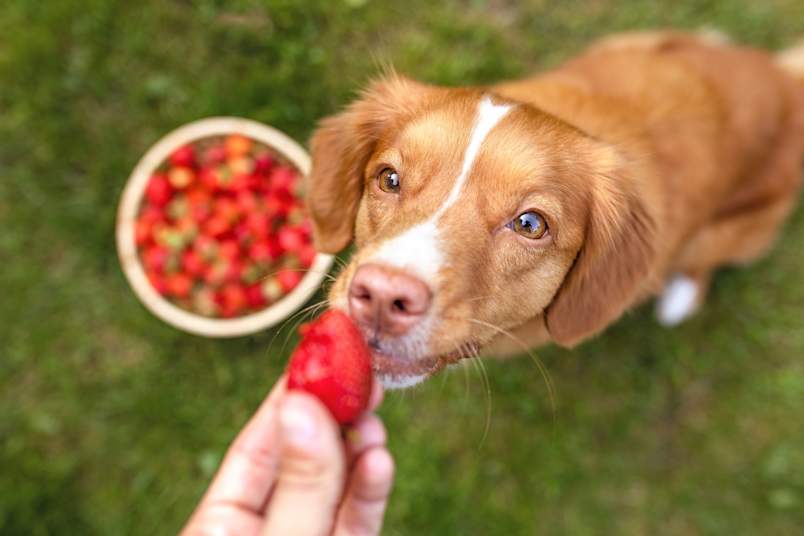
Even healthy treats should be served in moderation. How much strawberry a dog can eat depends on their size, calorie needs, and overall diet, but this chart gives you a safe place to start.
Dog Size | Weight | Suggested Serving |
Extra Small | Under 10 lbs | ½ to 1 small strawberry |
Small | 10 to 20 lbs | 1 to 2 small strawberries |
Medium | 20 to 50 lbs | 2 to 3 strawberries |
Large | Over 50 lbs | 3 to 4 strawberries |
These amounts are meant as an occasional treat, not a daily snack, and should still fit within your dog’s overall treat calories for the day.
Creative Ways to Serve Strawberries to Your Dog
If you’re looking for an extra special treat for your pup, you might want to make them a strawberry dog treat. Here are a couple recipes you can use.
Strawberry Yogurt Bites
Ingredients
2 to 3 fresh strawberries, chopped
½ cup plain unsweetened Greek yogurt
Optional: 1 teaspoon natural peanut butter (xylitol-free)
Instructions
Blend or mash the strawberries until smooth.
Stir them into the yogurt.
Spoon into silicone molds or an ice cube tray.
Freeze until firm, then serve as an occasional treat.
Best For: Warm weather, teething puppies, or dogs who love frozen snacks.
Stuffed Strawberry Kong
Ingredients
2 strawberries, mashed
A spoonful of plain pumpkin puree
A small amount of plain Greek yogurt
Instructions
Mix the ingredients together.
Spoon into a KONG or similar treat toy.
Freeze for a longer-lasting enrichment treat.
Best For: Mental enrichment and slower snackers.
Always check in with your vet before trying a new food. Even healthy treats can come with surprises, and sometimes all it takes is one new food, one sensitive stomach, or one ingredient you didn’t notice on the label.
When a Sweet Treat Leads to an Unexpected Vet Bill
Most strawberry snack times end with a happy dog and an empty bowl, but if your pup eats too much, reacts to a new food, or gets into a strawberry product with unsafe ingredients, that sweet moment can turn stressful fast.
If your pup seems a little off after trying strawberries, keep an eye out for:
Vomiting or diarrhea
Itching or facial rubbing
Loss of appetite
Excessive drooling
Trouble breathing or facial swelling
Mild stomach upset? Call your veterinarian and check in.
Trouble breathing, swelling, tremors, or collapse? Head to the emergency vet right away.
How Pet Insurance Helps When Treat Time Gets Expensive
When something doesn’t sit right, getting your dog the care they need often means making decisions quickly. Having a pet insurance plan in place before something goes wrong can make those decisions a little easier.
An unexpected trip to the vet could include:
Emergency exam: $100 to $250+
Digestive upset: $400 to $1,500+
Allergic reaction: $500 to $1,000+
Xylitol poisoning in dogs: $600 to $3,000+
Overnight hospitalization: $600 to $1,700+
Of course, some of the best vet visits are the ones that help you avoid emergencies altogether. That’s where an optional dog wellness plan can help you budget for routine exams, vaccines, nutritional counseling, and other preventive care throughout your dog’s life.
Can Dogs Eat Strawberries Safely?
Thankfully, for most dogs, strawberry snack time is simple, safe, and uneventful. Strawberries can be a nutritious snack with natural plant compounds that may support cellular health and healthy aging in dogs. And while your pup probably isn’t thinking about antioxidants, they definitely know when you’re holding something worth sharing. So the next time you feel that familiar nudge at your leg, you can feel good about sharing a bite.