

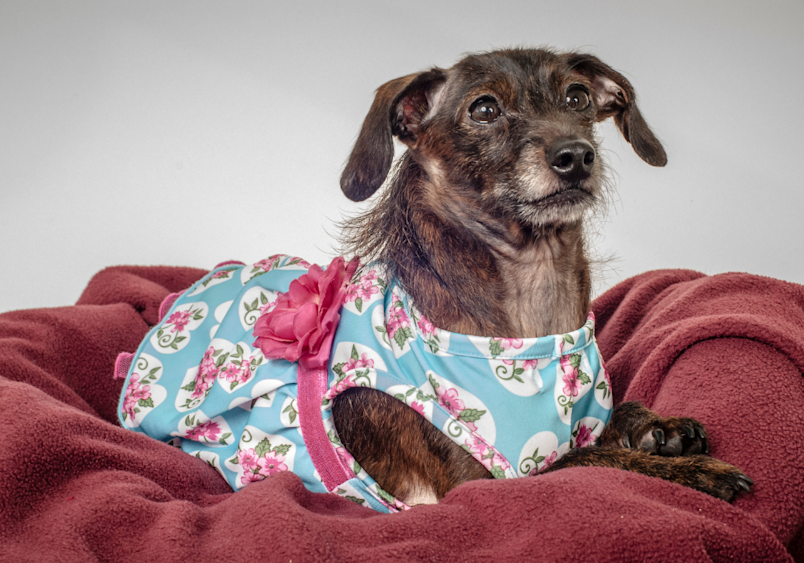
What do you get when you cross a dog that looks like a bratwurst with a dog that has a PhD in agility? A Doxiepoo is a pint-sized powerhouse that’s half-hotdog, half-genius, and 100% going to steal your spot on the couch.
Doxiepoo Quick Take
What is a Doxiepoo? A Doxiepoo is a cross between a Dachshund and a Poodle.
Common Traits: Doxiepoos are usually small in size and affectionate toward humans.
Good to Know: Doxiepoos tend to bark more than other dogs and are prone to developing back and eye problems.
Meet the Charming Doxiepoo
When you first see a Doxiepoo (also known as “Doxipoo” or “Doxie Poo”), you’ll probably wonder why it took so long for the breed to catch on! Doxiepoos feature the gregarious personality of the Poodle and the unusual physical appearance of Dachshunds (also known as Doxie dogs). While this crossbreed is one of the newer ones to emerge in recent years, their appeal is certainly here to stay!
What Is a Doxiepoo?
The name combines “Doxie” (Dachshunds are commonly referred to as “Doxies”) and a shortened form of the word “Poodle.” This cute name is fitting for such a delightful breed. You’ll have no trouble identifying a Poodle-Dachshund mix. With their curly fur and long torsos, they instantly stand out from the crowd!
Like other so-called “designer” dogs, Doxiepoos first appeared on the canine scene in the early twenty-first century, although no one’s sure which breeder first decided to mix the Poodle and Dachshund.
How Big Do Doxiepoos Get?
It’s impossible to predict the exact size a Doxiepoo will become since so few generations of them exist. This means there’s not yet a consistent size for this still unofficial breed. Additionally, Doxiepoos can have Toy Poodle, Miniature Poodle, or Standard Poodle genetics, although the latter is the rarest.
This variation in ancestry means that a Doxiepoo, full-grown, can range from less than ten inches at the shoulder to nearly fifteen inches, although most fall somewhere in this range. Doxiepoo puppies typically reach their full height and weight between 6 and 10 months old.
What Do Doxiepoos Look Like?
A Dachshund and Poodle mix can look much different from another, even a littermate. Their appearance depends on which traits they inherit from either side. For example, most Doxiepoos have curly hair that resembles that of a Poodle, but some can have coats that are only moderately wavy. Most Doxiepoos have long backs thanks to their Dachshund side, but this isn’t a guarantee. Doxiepoos can be either solid or multicolored, with colors that include but are not limited to:
Red
Apricot
Cream, black
Chocolate
Doxiepoo Personality and Behavior
As is the case with other newer crossbreeds, Doxiepoo personalities can be somewhat of a mixed bag. While they tend to be affectionate with their human family, their Dachshund side may make a Doxiepoo territorial around other dogs. Additionally, these little ones are almost certain to be proficient barkers since both parent breeds are notorious “yappers.”
Training Your Doxiepoo
Consistent training and early socialization can reduce barking and territorial behavior. When it comes to Doxiepoos, training your dog is essential. Begin training early and socialize your dog as soon as you can. Learning to be around other dogs at a young age can increase the chances that your Doxiepoo will behave appropriately around other pets and people.
Major Doxiepoo Health Problems
Unfortunately, no dog is guaranteed a life free from health problems. Doxiepoos are prone to certain inherited conditions. Some of the most common include:
Back problems: Intervertebral Disc Disease (IVDD) is a disease that affects the spinal joints. While this problem can be treated, the most severe cases often need surgery to prevent eventual paralysis.
Dental disease: Small dogs, such as Doxiepoos, are more likely to experience dental issues. Brushing and regular dental checkups can keep their teeth healthy.
Ear infections: Doxiepoos have floppy ears. This ear shape is susceptible to infection since the ear canal can trap bacteria.
Eye problems: Poodles are at higher risk for developing problems such as Corneal Dystrophy and Optic Nerve Hypoplasia, both of which can affect their vision over time.
Caring for Your Doxiepoo
The Doxiepoo is a hardy little dog, but they aren't invincible. Because they can inherit the Poodle’s risk for dental disease and the Dachshund’s high predisposition for IVDD, veterinary bills can escalate quickly. An unexpected spinal surgery can cost between $5,000 and $9,000. Embrace offers puppy insurance to make sure you can always say “yes” to necessary medical care.
Because Doxiepoos can develop serious health problems, regular medical checkups are a must. Many conditions can be treated early, saving your pup from pain while also lowering your vet bills. Adding on a puppy wellness plan is a great way to help you budget for the routine care your pup needs.
Finding Doxiepoo Puppies
Because Doxiepoos are less common than more traditional breeds, you’ll almost certainly need to visit a breeder to find one. However, don’t settle for just any breeder you come across online. Puppy mills are virtually everywhere, and you don’t want to support a breeder who neglects or abuses their dogs.
Signs of a Quality Breeder:
The "Interview": They will ask you many questions about your lifestyle, home, and experience to ensure you are an appropriate fit for a Doxiepoo.
Transparency: They provide proof of health screenings for both the Poodle and Dachshund parents.
Living Conditions: They maintain clean, spacious facilities where dogs have constant access to fresh water and high-quality nutrition.
Socialization: Puppies are raised in a home environment and introduced to different sights, sounds, and people early on.
Documentation: They offer a clear contract and often have positive reviews or references from previous adopters.
Is a Doxiepoo Right for You?
Before adopting a Doxiepoo, take some time to consider whether your lifestyle matches the breed’s needs. For example, because Doxiepoos can be territorial, they aren’t the best choice for first-time dog owners. They need someone who has experience training dogs. Other considerations include:
Children in the home. Doxiepoos are too fragile for roughhousing, and children can easily hurt these small dogs by mistake.
Your schedule. This breed needs a lot of companionship. If you work long hours and are rarely home, a Doxiepoo can develop separation anxiety and depression.
Your activity level. Many Doxiepoos are quite active. Owners need to be ready for frequent play sessions and daily walks.
Doxiepoos Are Great Fits for Many Owners
Because a Doxiepoo is a Dachshund-Poodle mix, they can inherit physical and behavioral traits from either side. Most Doxiepoos are small dogs with wavy or curly coats and who form strong bonds with their families. This breed isn’t right for everyone, so be sure you are patient and active enough to keep a Doxiepoo happy before you commit. Pet owners who do careful research will enjoy a wonderful relationship with their Doxiepoo!
Whether they’re outsmarting you for a piece of chicken or curled up like a fuzzy bratwurst in your lap, one thing is certain: life with a Doxiepoo means you’ll never have a dull moment.