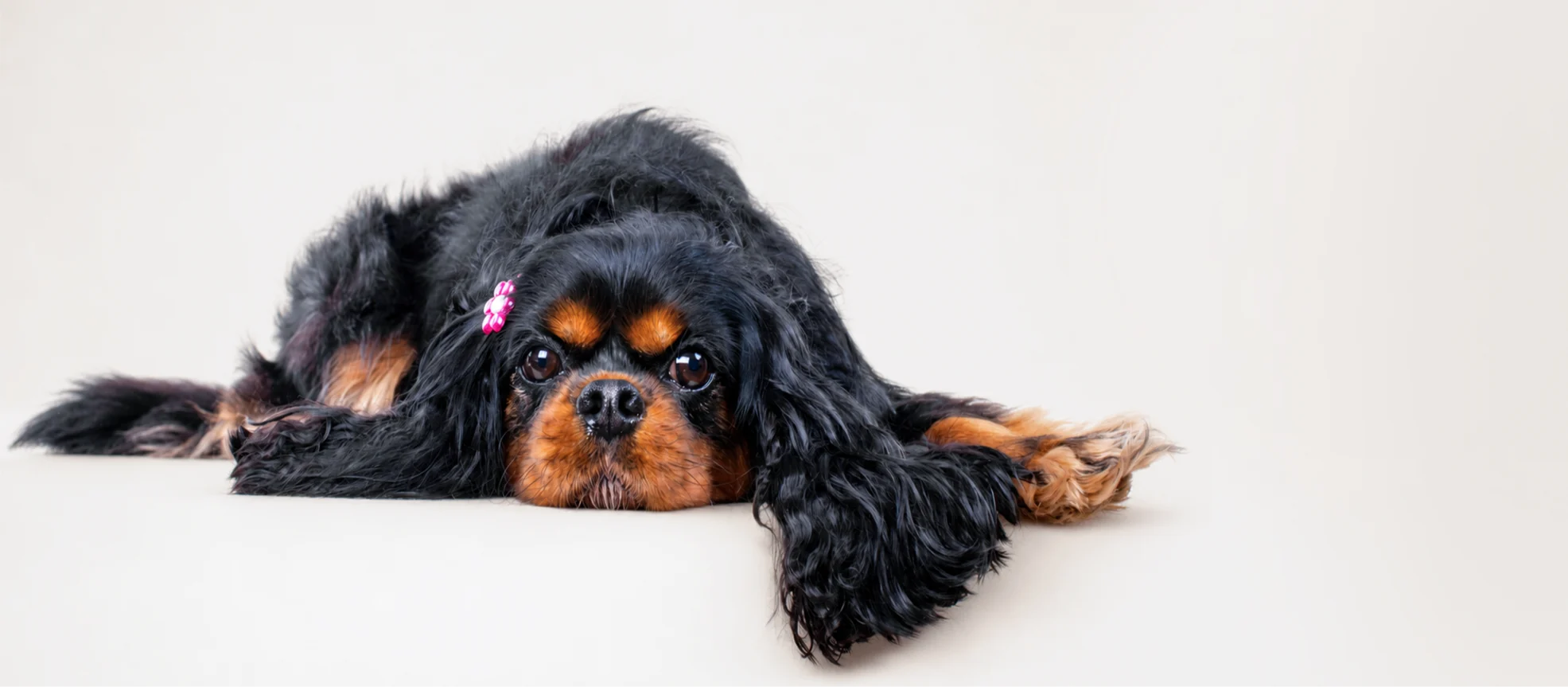
Why Is My Dog Coughing?
Written by Chyrle Bonk DVM
Updated Oct 28, 2026

Main Takeaways
Coughing is your dog’s natural way of clearing irritants from the throat and airways. While an occasional cough may not be cause for concern, frequent or persistent coughing can signal an underlying health condition. The sound and timing of your dog’s cough, along with any other symptoms, can offer important clues about what may be causing it. Read on to learn what different types of coughs may mean, common causes of dog coughing, what you can do at home, and when it’s time to see your veterinarian.
What Your Dog’s Cough Sounds Like
A dry, honking cough may point to irritation in the trachea or upper airway, while a wet or gurgling cough can be associated with fluid or mucus in the lower airways. Gagging after coughing may indicate throat irritation, while a persistent cough warrants veterinary evaluation.
Dry, Hacking, or Honking Cough
This one will remind you of a goose, as it often takes on a honking sound. Dogs may hack or retch after a few of these coughs but usually don’t produce any phlegm. Dry, honking coughs are often caused by irritation in the trachea, such as an infection or malformation.
Wet or Productive Cough
A wet or productive cough may occur when fluid or mucus is present in the lower airways, such as with pneumonia or other respiratory conditions. Your dog’s cough may sound moist or gurgling, and you may also notice changes in their breathing.
Gagging or Retching
Gagging or retching that happens at the end or after a cough often points to throat irritation, which could be due to the cough itself or mucus left behind. It may occur with either a dry or wet cough.
Persistent Cough
Some coughs are short-lived or intermittent, while others may persist or keep coming back. A persistent cough can be associated with chronic conditions such as heart disease or bronchitis and should be evaluated by a veterinarian.
Reverse Sneezing
Though not truly a cough, reverse sneezing is a phenomenon where dogs rapidly and forcefully inhale air that sounds scary and can mimic a coughing sound. Most reverse sneezing is due to an irritant and short-lived.
Why Is My Dog Coughing at Night?
It’s not necessarily the time of night that matters, but the fact that your dog is lying down. A cough that consistently worsens at night or while resting can be associated with heart disease, so it’s important to mention this pattern to your veterinarian.
Why Is My Dog Coughing After Exercise or Excitement?
Exercise and excitement require the respiratory system to ramp up efforts in order to supply the body with oxygen. This extra effort can lead to increased coughing from a variety of causes due irritation in the airways as well as fluid in the lungs.
Common Causes of Coughing in Dogs
The sound and timing of your dog’s cough can point to several possible causes.
Respiratory Infections
Kennel cough and canine influenza are the best known, but there are plenty of bacterial, viral, and fungal causes of dog coughing that typically create dry, hacking coughs if they affect the upper airways and potentially wet coughs if they are lower down. Coughs are typically worse after exercise or excitement. Also look for sneezing, fever, not eating, lethargy, and difficulty breathing.
Tracheal Collapse
By far more common in small breeds, tracheal collapse in dogs occurs when the firm rings of the trachea degrade, narrowing the airway on inhalation. Dogs will have a dry, honking cough that is far worse with excitement or exercise and gets better once a dog has calmed down.
Heart Disease
The heart and the lungs are in close proximity and reliant on each other. So, when the heart decreases function, as it does with heart disease in dogs, fluid can build up in the lungs, making it difficult to breathe and causing a wet cough that gets worse when lying down. Heart disease also often contributes to a dog tiring more easily, panting more, pale gums, and weight loss.
Allergies and Airway Irritants
Many of us usher in spring with sneezing, watery eyes, and coughing. Well, dogs are no different. Airway irritants like pollen, molds, dust, smoke, and chemicals can lead to increased coughing that’s often dry and hacking. Coughing due to allergies or irritants may be seasonal or year-round depending on the irritant involved.
Chronic Bronchitis
Long-term inflammation in the lower airways can produce a dry cough that lasts and lasts. Exercise intolerance, wheezing, and gagging are other symptoms to watch for.
Pneumonia
The lungs are meant to be filled with air, but infections and other issues can cause them to fill with fluid instead. This causes a wet, gurgly cough, difficulty breathing, and often lethargy, a decreased appetite, and fever. Seek veterinary care immediately.
Parasites
Most dog parasites are confined to the skin and intestines, but there are two, heartworm and lungworm, that can create a cough. These parasites create inflammation and blockages in the heart, blood vessels, and lungs that cause coughing, wheezing, labored breathing, and exercise intolerance.
Foreign Objects
A foreign object lodged in your dog’s throat or airway can cause sudden coughing, gagging, or retching. If your dog is struggling to breathe, pawing at their mouth, or appears to be choking, seek emergency veterinary care immediately.
When to Worry About Dog Coughing
Seek emergency care immediately if your dog:
Has difficulty breathing
Has blue/pale gums
Is coughing up blood
Is choking, gagging, or pawing at the mouth (possible obstruction)
Collapses, shows weakness, or faints
Call your vet if the cough:
Lasts more than a few days
Recurs after getting better
Is accompanied by other signs of illness
Puppies, seniors, brachycephalic dogs, and dogs with chronic illnesses are at a higher risk of developing more severe complications, so seek veterinary care sooner with these dogs.
Dog Coughing Treatment at the Vet
Diagnosing a dog cough is going to start with an exam including listening to your dog’s heart and lungs. Bloodwork, X-rays, and heartworm testing may also be done.
Treatment by Cause
Kennel cough: Many cases are mild and improve with rest and supportive care, while some dogs may need medications prescribed by a veterinarian. The Bordetella vaccine can help protect against one of the common causes of kennel cough.
Heart disease: Managing heart disease often requires a combination of medications, lifestyle changes, and monitoring.
Tracheal collapse: Weight management, using a harness, and anti-inflammatories manage mild to moderate cases, while more severe cases may require surgery.
Pneumonia: Treatment depends on the cause and severity and may include medications and supportive care. Because pneumonia can cause difficulty breathing, prompt veterinary care is important.
Allergies and bronchitis: Treatment depends on the underlying cause and may include medications to reduce inflammation, along with limiting exposure to airway irritants.
Home Remedies and Care for a Mild Dog Cough
An occasional, mild cough may improve with supportive care at home. If your dog’s cough persists, gets worse, or is accompanied by other signs of illness, contact your veterinarian.
Humidifier or steam therapy can help loosen mucus and calm mild irritation.
Switching from a collar to a harness when on leash can reduce stress and irritation to the throat.
Reduce airborne irritants like smoke, dust, and cleaning chemicals in your dog’s environment.
Provide your dog with a calm recovery space and rest between coughing episodes.
Never give your dog human cough medicine or antibiotics unless your veterinarian specifically recommends them.
What to Track Before Your Vet Visit
Dog coughing doesn’t always occur in the vet’s office, so be prepared to share some information with your vet.
Keep a cough log to note when it happens (night, after exercise, at rest) and what makes it worse or better.
Note the sound, frequency, and how long it lasts. Take a video if possible – vets love visuals!
Mention other signs, such as lethargy, not eating, difficulty breathing, or exercise intolerance.
How Embrace Pet Insurance Can Help
Tracking when your dog coughs, what it sounds like, and any other symptoms can give your veterinarian helpful clues about what may be causing it. Because persistent coughing can require diagnostic testing and ongoing treatment, an Embrace Pet Insurance policy may help cover eligible costs for covered conditions, including diagnostics and treatment, so cost is less of a barrier to getting your dog checked out.
A Routine Care product can also help you budget for preventive care that may protect against some causes of coughing, including vaccinations that help protect against kennel cough and heartworm prevention. Keeping up with these routine preventive measures can help reduce your dog’s risk of certain respiratory illnesses and infections.
Caring for Your Coughing Dog
Dog coughing can be caused by a number of issues that produce different coughing sounds, patterns, and other symptoms. An occasional, mild cough may improve with supportive care at home, but persistent or worsening coughing should be evaluated by a veterinarian. Seek veterinary care immediately if your dog has difficulty breathing, collapses, or shows significant weakness. Don’t ignore changes in your dog’s cough. Pay attention to when it happens, how it sounds, and whether other symptoms develop, and trust your instincts when something doesn’t seem right.
FAQs
You should contact your veterinarian if your dog’s cough persists, gets worse, keeps coming back, or is accompanied by other signs of illness. Seek emergency veterinary care for difficulty breathing, blue or pale gums, coughing up blood, collapse, or signs of choking.
Written by
Chyrle Bonk has been practicing veterinary medicine since 2010. Along with that, she fills her time writing veterinary content as a way to reach more pet owners than just those that come into the clinic. When not working, Dr. Bonk loves spending time with her family and critters somewhere outdoors.
Let’s get your pet covered
30-day money-back guarantee*
10% multi-pet discount**
No obligation, see your price in just 2 minutes