


Life with cats means we’re accustomed to their moods shifting at the drop of a hat. Just ask anyone who’s been bitten mid-pet by a purring cat. As a vet, I play a major role in causing some of those mood shifts, most notably non-recognition aggression when one cat hisses and becomes aggressive towards another cat that has been away.
Cat non-recognition aggression can cause a lot of frustration and hurt feelings in your home, so let’s look at what causes it, how long it can last, what you can do about it, and when to enlist professional help.
What is Non-Recognition Aggression in Cats?
Cat non-recognition aggression is an odd feline behavior that occurs when one cat attacks another that has spent time away from home. Even though these cats may have gotten along beautifully before, the return of one may bring out aggression from the cat that remained at home.
This isn’t due to a cat just being in a bad mood, it’s actually a product of scent. A cat’s olfactory system is highly developed to process both familiar and unfamiliar scents. They rely on this sense, rather than sight or sound, to recognize familiar animals. When one of your cats comes home smelling like something other than their normal selves, it can set off a ‘stranger danger’ alarm in the other cat that stayed home which can lead to aggression.
Aggression between cats isn’t something you’ll want to take lightly. Aggression between cats can lead to knock down, drag out fights that may result in cat bite abscesses.
My Personal Experience with Feline Non-Recognition Aggression
I learned this one the hard way. My family travels with our cats, and on one trip our calico, Mackenzie, got sick and landed us in the emergency room at 1 a.m. Mackenzie recovered fully, with no lasting effects from the stray sip of espresso she stole while I was out of the room, but the homecoming was anything but calm.
Our Siamese, Rigby, met us at the door with hissing, growling, and flying fur. For a moment Mackenzie and I just froze. Then it clicked: Rigby was not being cruel. She had no idea this was her best friend, because Mackenzie came home smelling like a stranger. In our case, the standoff lasted a full two weeks. These days, both girls go to the vet together.
Why Non-Recognition Aggression in Cats Happens After a Vet Visit
Veterinary visits can be blamed for a lot of strange cat behavior. Here’s how they relate to cat non-recognition aggression specifically:
Clinic smell: Veterinary clinics have a distinct odor. It’s a mix of strong disinfectants, animals, and pungent medications. So, when a cat visits a veterinary clinic, they pick up some of that smell, which can mask their normal scent, making it so the cat at home doesn’t recognize them.
Medication smell: Cats that go to the vet do so for a reason. It might be to get vaccinations or it might be because of an illness or injury that requires extensive treatment. Medications, including flea and tick preventatives, ointments, cleansers, and oral medications, can give your cat a different scent.
Stress hormones: Most cats don’t look forward to a veterinary visit, and some can downright hate them, making vet visits a major cause of stress. When a cat is stressed, they release copious amounts of stress hormones which can shake up their natural scent.
Signs of Cat Non-Recognition Aggression
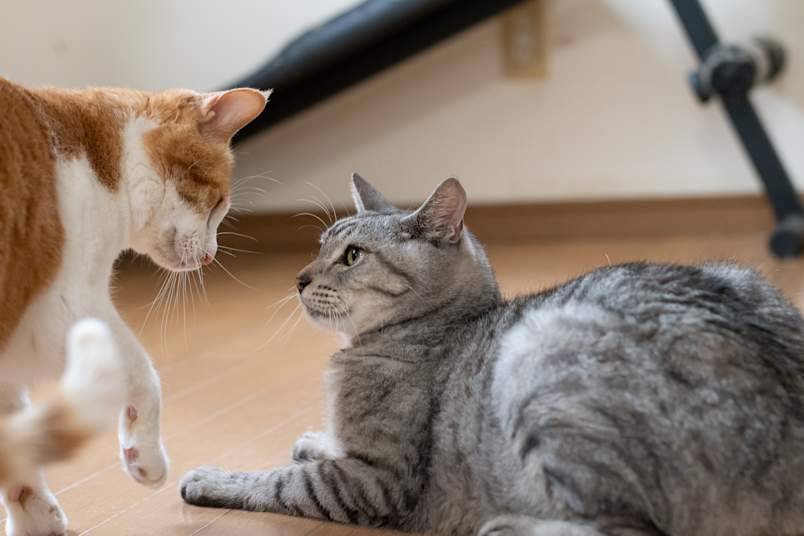
One cat’s aggression towards another may be fairly obvious or it may be subtle. Here’s what to watch for from the cat showing the aggression:
Hissing, spitting, growling, and other increased vocalizations
Tense body, arched back, hair raised on end
Blocking access to food, water, litterbox, or bed
Swatting, chasing
The cat that’s being attacked may show signs such as:
Keeping their body low to the ground, crouching
Tucking their tail between their legs
Running away
Hiding
How Long Does Feline Non-Recognition Aggression Last?
Feline non-recognition aggression doesn’t have a set timeframe. It can have your cats upset for just a few hours or even a few weeks. The duration of the aggression can depend on how long a cat was gone, the temperament of both cats, and steps that you take to resolve it.
How long a cat was gone. Cats that leave for a prolonged period of time, such as for hospitalization, commonly lose more of their familiar scent. Hospital stays are more likely to instill a longer lasting scent of the veterinary clinic, medications, and stress.
Cat temperament. Some cats are naturally higher strung than others, while some are more laid back. Generally, the higher strung a cat is, the longer it will take them to reaccept the other cat. More laid-back personalities may settle down sooner.
Steps to resolve non-recognition aggression. You may choose to stand back and let your cats take care of it, or, better yet, take some steps to help your cats sort it out to prevent possible injuries and stress.
How to Fix Feline Non-Recognition Aggression
Fixing non-recognition aggression in cats is similar to introducing them for the first time.
Bathe both cats. It’s best to start with a clean slate and remove as much of the vet clinic scent as you can by bathing both cats to return them to a neutral smell.
Keep them separated. Don’t allow them to directly contact each other until the aggression has subsided in order to prevent fights.
Use scent swapping. Rub the aggressive cat with a towel and then rub that same towel on the other cat to help transfer their scent.
Allow them to smell and visualize each other while providing the aggressive cat with treats or other rewards when they don’t growl or hiss.
Once aggression at a distance has subsided, you can start to let them together under supervision. If the aggression returns, separate and start over.
Be patient and give your cats all the time they need to resolve the situation.
Most cases of cat non-recognition will subside within a few days to weeks, but be aware that repeat episodes are likely to occur if one cat spends time away from home again. Rushing is the most common reason reintroductions stall.
How to Prevent Feline Non-Recognition Aggression
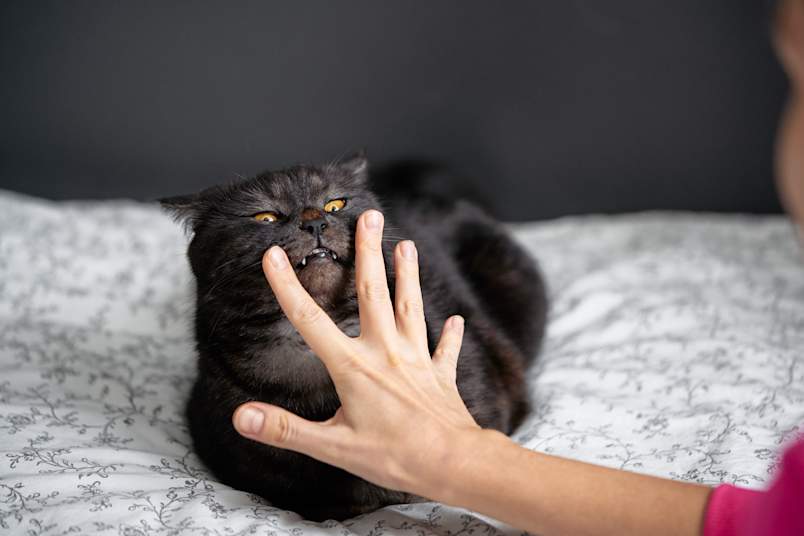
It’s always better to prevent a negative experience than deal with the aftermath, especially when it comes to aggression between cats. In order to keep everyone comfortable, try the following:
Ensure that your cat is completely recovered from sedation or anesthesia to prevent unfamiliar cat body language.
Bathe the cat as soon as possible to remove any vet clinic odors before your other cat smells them.
Rub the cat with something that has their normal scent on it, likely a toy or bedding.
Allow both cats to get used to each other’s sounds and smells before seeing each other.
Take both cats to the vet, if possible, so that they can share the unfamiliar scents and not be out of each other’s sight. This is one of my favorite ways to prevent aggression. I welcome all cats in the household not only to prevent aggression but also to create a positive vet experience for the cat that doesn’t need to be seen.
When to Contact a Veterinarian or Cat Behaviorist
Most cats will return to normal within a few days or weeks, but some cats will hold on to their aggression for longer. Others will allow it to escalate to full blown fights.
A veterinarian or cat behaviorist can help resolve the aggression and determine whether an underlying medical condition could be contributing to the behavior. If you’re wondering how to tell if your cat is sick, watch for additional signs such as changes in appetite, energy level, litter box habits, or grooming.
Seek professional help if:
Your cat’s aggression escalates
The aggression doesn’t improve even gradually
One cat is physically harming the other
One cat is blocking resources from the other
Either cat stops eating, drinking, or using the litter box
You notice other abnormal behavior from either cat
The Importance of Pet Insurance
Aggression is worth taking seriously: the Cornell Feline Health Center reports that 27 percent of cats surrendered to shelters for behavioral reasons were given up because of aggression, and most of those cases are manageable with the right help.
While most cats work things out with time and a gradual reintroduction, some need additional veterinary care. If your veterinarian recommends follow-up visits or a behavior treatment plan, the costs can add up quickly.
An initial consultation with a veterinary behaviorist alone may cost $400 to $600 or more, and you may need several appointments. Cat insurance may help cover eligible accident and illness care, including veterinarian-supervised behavioral therapy for diagnosed behavioral conditions, so you can focus on helping your cats instead of worrying about how you’ll pay for the next appointment.
Life After Feline Non-Recognition Aggression
It may feel like your cats have forgotten years of friendship in a single afternoon, but with a little patience, most cats rediscover what’s been there all along. After Mackenzie’s late-night emergency vet visit, I learned my lesson. Whenever possible, my cats go to the veterinarian together, and I take a few extra steps to help them come home smelling familiar. It’s a little more planning up front, but it’s worth the peaceful homecoming.